Elena Grudzinskaitė. Paper on Paper
-
Author of the exhibition texts
Monika Krikštopaitytė
-
Designer
Agnė Dautartaitė-Krutulė
-
Editor
Violeta Kundrotienė
-
Translator
Jurij Dobriakov
-
Creative collaborations with
Justina Gražytė, Laura Matukonytė, Birgitte Munk
-
Organised by
Vilniaus grafikos meno centras
-
Partners
Vilniaus dailės akademija, Vilniaus universiteto bibliotekos Grafikos kabinetas
-
Projektą finansuoja
Lietuvos kultūros taryba, Lietuvos dailininkų sąjunga
-
Exhibition is financed by
UAB DotPack
-
Media partners
artnews.lt, „7 meno dienos“
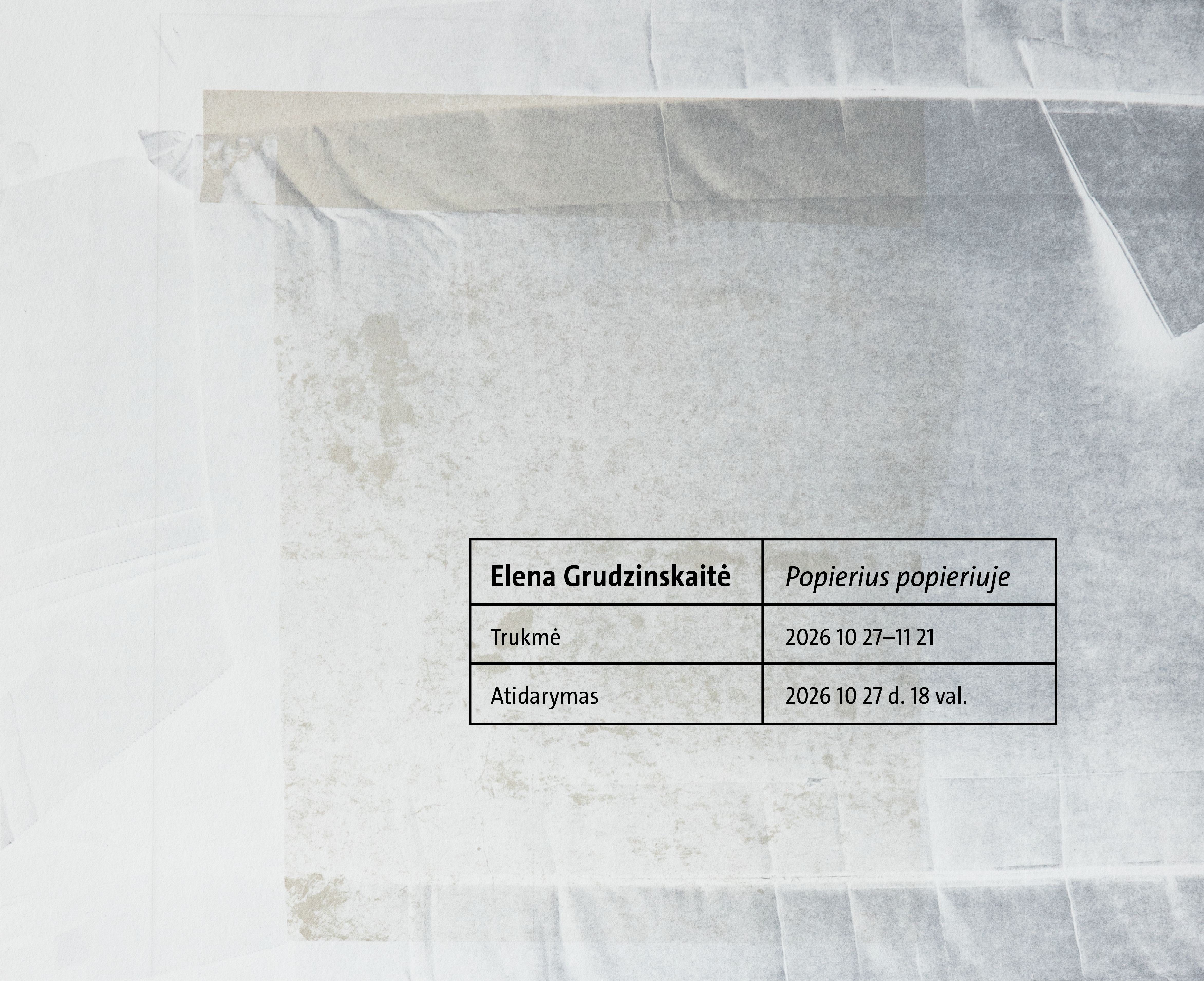
From October 27 to November 21, 2026, the Vilnius Graphic Art Centre gallery ‘Kairė-dešinė’ will host an exhibition by Elena Grudzinskaitė’s titled “Paper on Paper.” The opening will take place on October 27, 2026, at 6 pm.
For quite a while, Elena Grudzinskaitė focused on the landscape: the viewers were urged to examine living, shifting, and depleted terrains, or observe both actual imagery of the lunar surface and imagined moonscapes here on Earth. The artist’s current creative stage, which began in 2024 and is enveloped by the title Paper on Paper, evolved from an eponymous series of photopolymer engravings. In its own way, this work is related both to landscape (wherever a line appears, there is always a glimpse of the horizon) and to sustainability dilemmas. From a more conceptual perspective, the artist reminds us that paper itself originates from a landscape teeming with vegetation; thus, our relation to paper is more than merely visual. In this instance, however, the primary context is culture, human activity, routine actions, and connections.
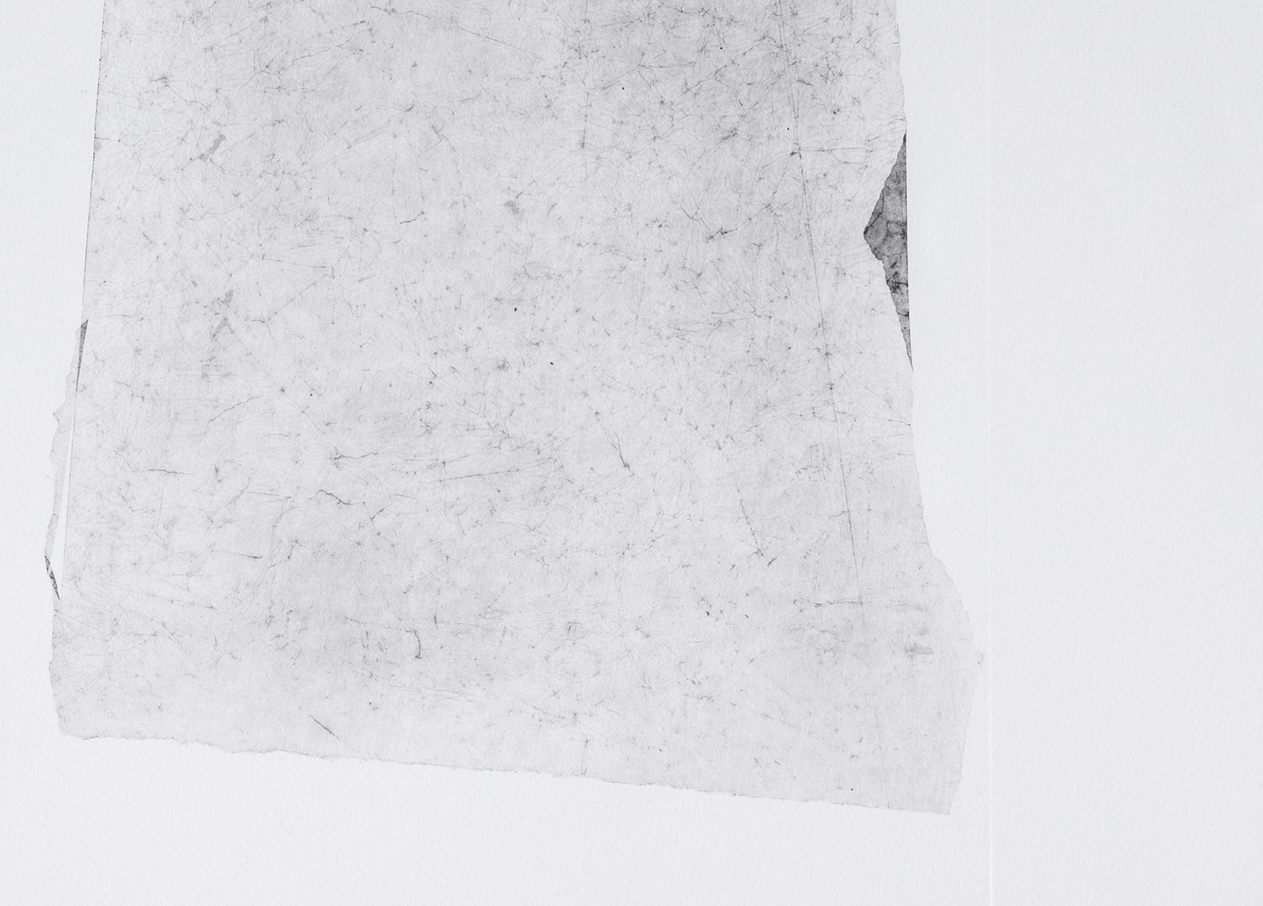
The series of projects titled Paper on Paper directly reflects an interest in paper in its various roles in art and behind the scenes, all transferred back onto paper, creating a circular movement. The artist herself says: “In this paper project, I turn to the process-oriented, everyday aspects of my studio practice; I engage with paper, which serves as my constant environment and the raw material for my creative output. In my work, I seek to make paper carry no explicit textual, informational, or visual content, and instead generate an imaginary, unique, and authentic substance of its own.”
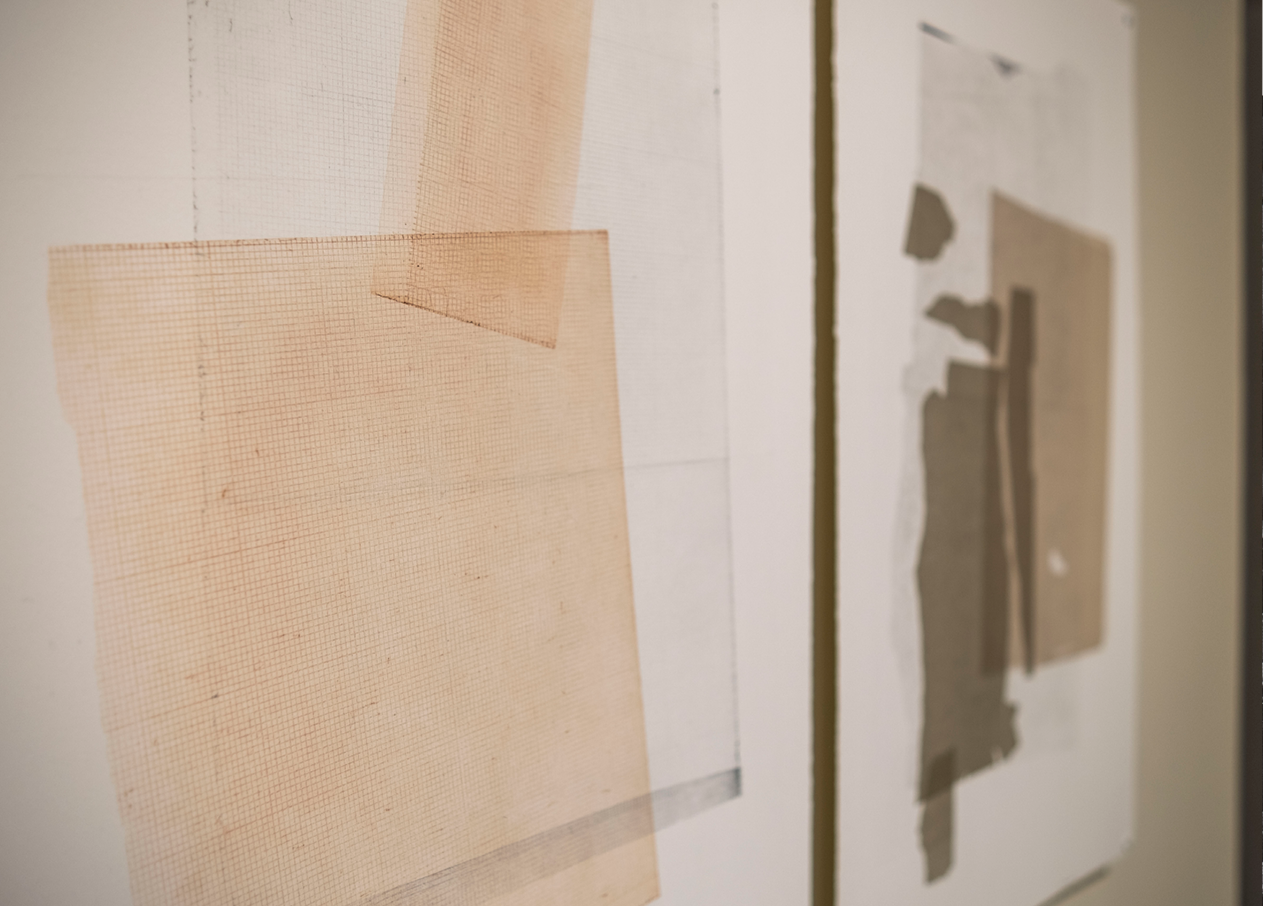
The act of observing negligible scraps of paper evolves into something akin to meditation. A closer look at the compositions formed from these fragments stirs the imagination: one piece resembles a musical staff, another a mesh, while a third is coloured like fired clay bricks. By shifting focus to these marginal artifacts, the hierarchical system of values is transformed into a friendly horizontal plane, where every element is significant. This calls for a rethinking of social relations and one’s own connection with the material environment.
Quite early on, Elena decided to stop framing her works, choosing instead to store them laid flat in drawers, much like many print rooms, libraries, and archives do. Consequently, the works, no longer separated by glass, occupy less space and maintain a closer connection to their surroundings. Meanwhile, the author’s artistic choices further emphasize this relationship between the actual art and the elements that support it.
As an individual, an artist, and teaching head of the Graphic Art Department at the Vilnius Academy of Arts (VAA) alike, Elena Grudzinskaitė is deeply concerned with the importance of community. She notes that for printmaking as an art form, community is crucial; the ability to come together, collaborate, and exchange knowledge is its distinctive, even typical feature. There are libraries and archives of graphic art, and even a network of printmaking centres in the world.
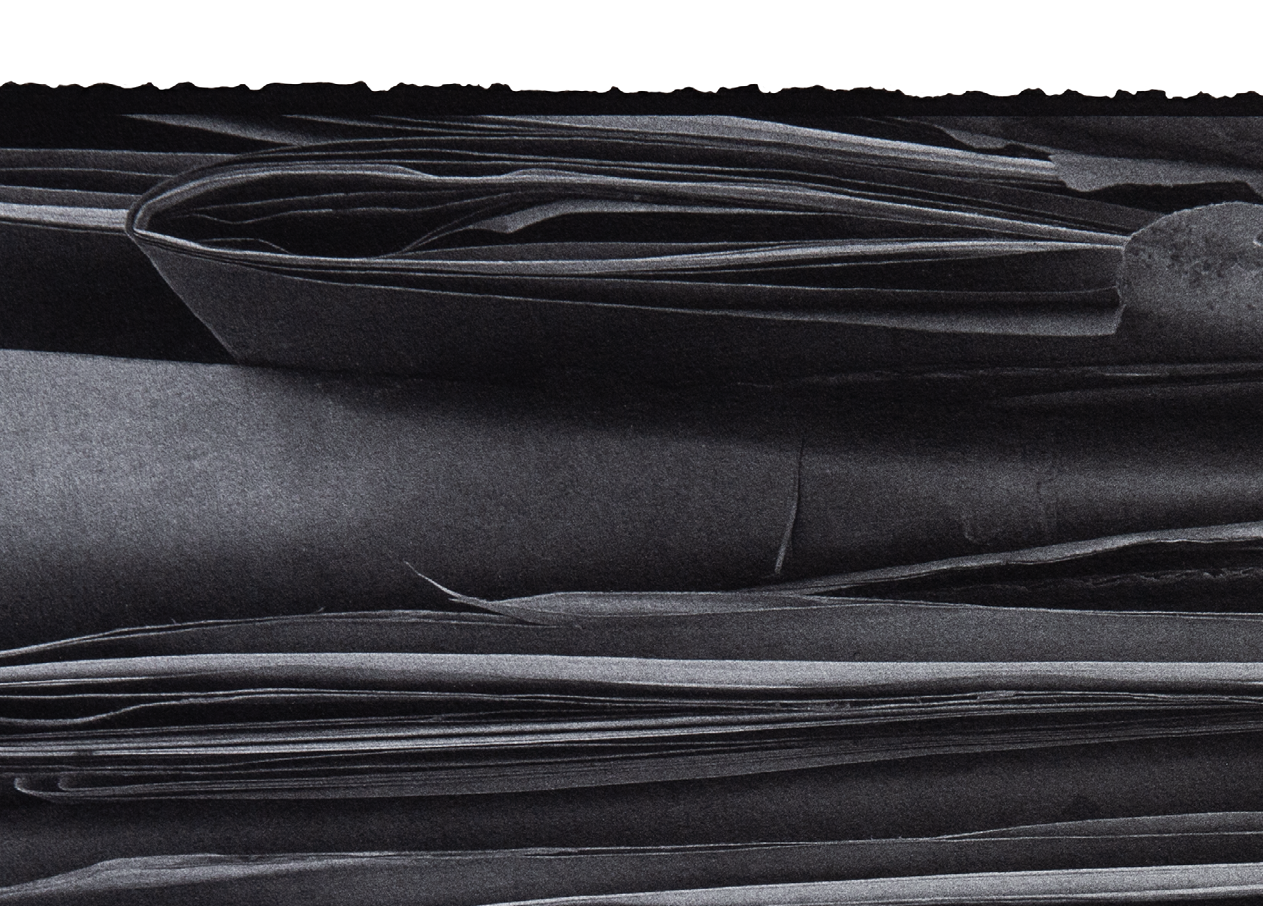
Communal connections across time and space are even more clearly visible where prints are stored. Thus, Elena is captivated by the sight of open drawers in the Vilnius University Graphic Arts Room, perceiving them as a unique landscape composed of numerous layers of time (Graphic Arts Room, 2026). Photographs of the drawers transferred onto thin elongated sheets using the photopolymer technique not only evoke an aesthetic experience, but also prompt the imagination to engage with mystery, the potential for dialogue, and the phenomenon of condensed time.
While observing the paper cycles within her creative environment, Elena’s attention was once drawn to a paper manufacturing company that shared still usable production leftovers with students and artists from the VAA. While the rolls of paper found practical applications, it was the compressed volumes of paper waste that caught her eye as peculiar works of art in their own right. The artist captured their surfaces, transferring them onto black paper using silver ink, thereby granting them a new life (Paper Topographics: Silver Imprints, 2026). The dense patterns of lines and angles are likely to evoke associations with lush vegetation; thus, through landscape and recycling, the paper returns to its own cycle of reincarnation.
As Grudzinskaitė began to weave a thread of collaboration with the work of the artist Laura Matukonytė, she became intrigued by the latter’s paper installations and their leftovers. The shapes of the edges of cutouts seemingly trimmed according to templates, imprinted in Elena’s work, drift along a winding horizontal line, overlapping and merging to form a fragile movement. Meanwhile, at the ArtVilnius ‘25 art fair Elena found common ground with the contemporary textile artist Justina Gražytė. Both showcased leftovers of the use of textiles and paper, transforming them into evocative aesthetic objects; yet, alongside these scraps and mounds, they also left a lingering question of the sustainability of consumption.
The structure of Elena Grudzinskaitė’s creative work is characterized by going in circles, or perhaps rather spiralling, around the forms of landscapes, the fate of paper, and themes like connections, routine, sustainability, recycling, and sharing. However, this mode of movement does not imply a boundary; rather, it signifies a link and a need to revisit and to remain true to oneself. These circular movements penetrate into the very essence of art: the creation of human bonds.
Monika Krikštopaitytė
Program:
November 14 (Saturday) at 2 pm: Paper lithography workshop and guided tour of the exhibition with artist Elena Grudzinskaitė (no registration required).
November 21 (Saturday) at at 2 pm: Guided tour of the exhibition with artist Elena Grudzinskaitė.